
It’s imperative for the education sector to improve on learning environments of the past to meet the challenges of today for students of all ages and abilities.
Blog

Flexible seating and semi-sheer drapery. Image sourced from Pinterest.

Modular Lounge. Image sourced from Pinterest.

Creating seating configurations with ottomans. Image sourced from Pinterest.

Curtain partitions in break area. Warlock by Zepel. Photographer: Tom Ross.

Creating room partitions with velvet drapery. Warlock by Zepel. Photographer: Tom Ross.
Comfort Zone: Creating Dynamic Classrooms with Soft Furnishings
The design and functionality of education spaces can have a significant impact on the engagement and productivity of students. This includes the furniture, lighting, colour schemes, architecture, and furnishings which, when selected to support key outcomes, can elevate the effectiveness of the learning environment. It’s important for educators to have a clear vision of the intent in each space within an education building, as this greatly assists designers, architects, and furniture specialists to suggest the best options to achieve the desired result.
Learning Styles & Flexible Spaces
Learning Styles & Flexible Spaces
Today it’s accepted that not all students learn with one overarching method, and this also applies to modes of teaching that individual educators are naturally drawn to. Evidence has shown that there are no learning benefits and virtually impossible for educators to tailor teaching styles to individual students in groups. With this in mind, flexible spaces are considered fundamental in supporting students and the various ways they engage in group settings, like most schools, universities, and adult education centres.
Designing flexible education spaces is proven to yield prolonged enthusiasm and concentration in students. This also allows educators to have direct influence on the space by being able to quickly adjust the interior to the activity and teaching method. Replacing static rowed seating with flexible furniture and furnishings not only creates greater engagement through spatial diversity, but also the option for students to move away from groups for concentration and privacy, which is something students require in varying degrees based on their social preferences. Furniture and soft furnishings are regarded as the most effective to achieve agility as modular seating, partitions, adjustable desks, and drapery can instantly transform a space and enhance learning.
It’s imperative for the education sector to improve on learning environments of the past to meet the challenges of today for students of all ages and abilities.
The following outlines the benefits of various interior styling options that can be applied to education spaces:
Modular & Moveable Furniture
Modular & Moveable Furniture
Regarded as the most cost effective and versatile choice in education interiors, modular furniture has become increasingly popular. Perfect for collaboration and activities, modular sofas provide possibilities for students to communicate in groups, all while being incredibly comfortable. A high degree of adaptability with modular pieces is a priority and when selecting, choose lounges that allow for ease of maintenance, feature an ergonomic design, are customisable, can be stored, are portable, and importantly, are aesthetically pleasing. Explore options for seating configurations such as an ‘S’ form to contain multiple groups, rows for presentations, single seats for private study, and choice to add tables for activities and break time. There’s also flexibility in ottomans and stools as they can be moved around with ease, and be locked together to build dynamic and interesting shapes to encourage activity and play.
Selecting Upholstery Fabrics for Education Spaces
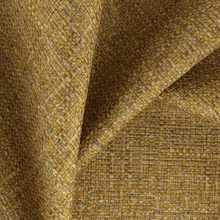
As a high-traffic environment, it’s imperative for education spaces to protect students as much as possible by being safe and healthy. Upholstery selections is one effective way to achieve this as students are in regular contact with the furniture for many hours a day via classes, lunchtimes, and private study periods. This multi-purpose furniture must not only be durable but hold many other high-performance properties. Our FibreGuard Pro range satisfies these other requirements by being anti-microbial, stain resistant, moisture and mildew repellent, and easy to clean for daily mishaps. Importantly, this range is contemporary and features striking patterns, geometrics, plain weaves, and textural designs in a range of practical neutrals, vibrant, and trend focused colourways.
Specially designed for the commercial, education, and healthcare industries, FibreGuard Pro, creates peace of mind for students and teachers. FibreGuard Pro designs are additionally FR tested, Oeko-Tex, ISO 14001 certified and exceptionally durable.
The below are examples of minimalist/neutral, maximalist/patterned schemes that can work across multiple furniture pieces in a space.



Versatile Drapery
Versatile Drapery
Creating inviting and sensory experiences through drapery can imitate the feeling of home in subtle and dynamic ways. This felt connection to a familiar space reduces stress in students and encourages concentration, creativity, and innovation. Drapery not only softens light but is calming with its inherent movement and adds sensory/visual interest through textures, patterns, and printed designs. Drapery is also a great option to create soft partitioned spaces in a classroom without the expense of installing walls, and creates partial privacy when students don’t want to be completely separated from others. Block-out and weighty velvets are a great option for these soft room dividers and hold strong acoustic qualities by deflecting or containing sound. These heavy designs are also great choices to shield classrooms from strong UV rays and soften sound in auditoriums and music rooms.
Selecting Drapery Fabrics for Education Spaces
When selecting drapery for classroom window treatments, it’s important to consider where student seating will be placed and the strength of the sunlight through windows at various times of the day. For varied climates, it’s worth considering pairing a block-out/heavy design with a sheer, so the room has the flexibility to be protected from UV rays but also the option for soft light to enter the space. This pairing will also create excellent sound absorption, particularly if there are numerous folds in the block-out construction, and privacy in the space. To create a dynamic look, it’s worth combining a plain block-out design with a textured or printed design. For classrooms that don’t require heavy drapery, a sheer or semi-sheer is just as effective, and still provides privacy, sun protection, and the enjoyment of filtered light in the room. As a public space, education buildings must comply with stringent regulations, including drapery with high durability and fire-retardant properties which are intrinsic to our FR One range. Like our FibreGuard Pro range, FR One is Oeko-Tex, ISO 14001 certified and available in various constructions, designs, and colours.
The below are examples of minimalist/neutral and maximalist/textured schemes that can work across window treatments and room dividers in a space.


It's evident that designing education spaces is a balanced combination of functionality, comfort, and inspiration to foster collaboration and performance. These design and fabric choices can enrich the human experience significantly, and educators and designers alike have a unique opportunity to respond to the evolving sociocultural changes in this sector.
The curvaceous lines favoured by master craftsmen like Vladirmir Kagan and Pierre Paulin have inspired contemporary designers to create pieces with organic forms. In this article we reveal manufacturing secrets, and discuss which upholsteries will accentuate curves in all the right places.
