
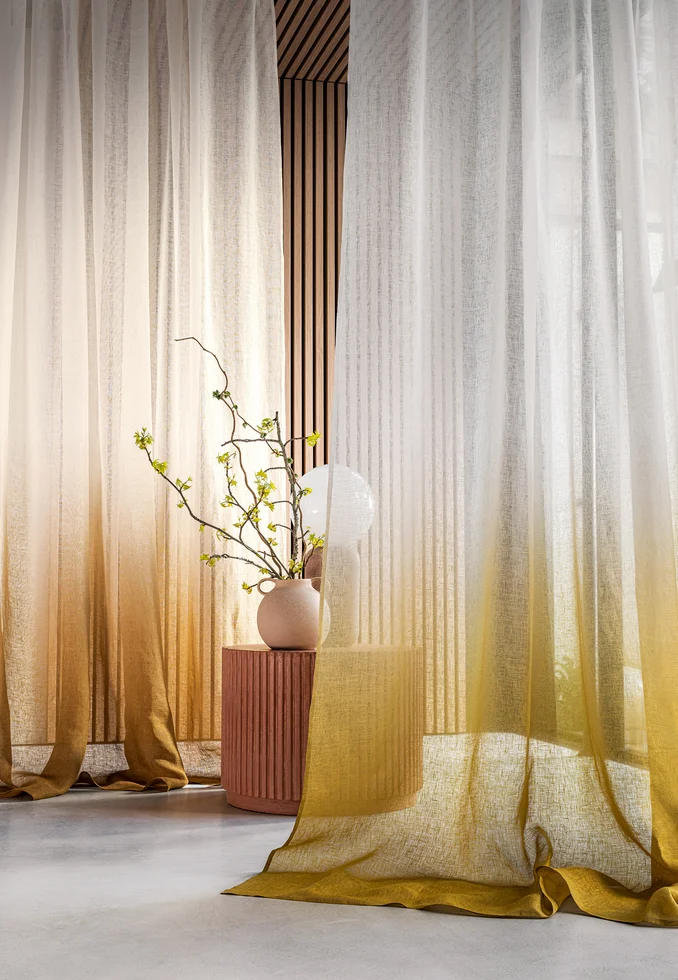
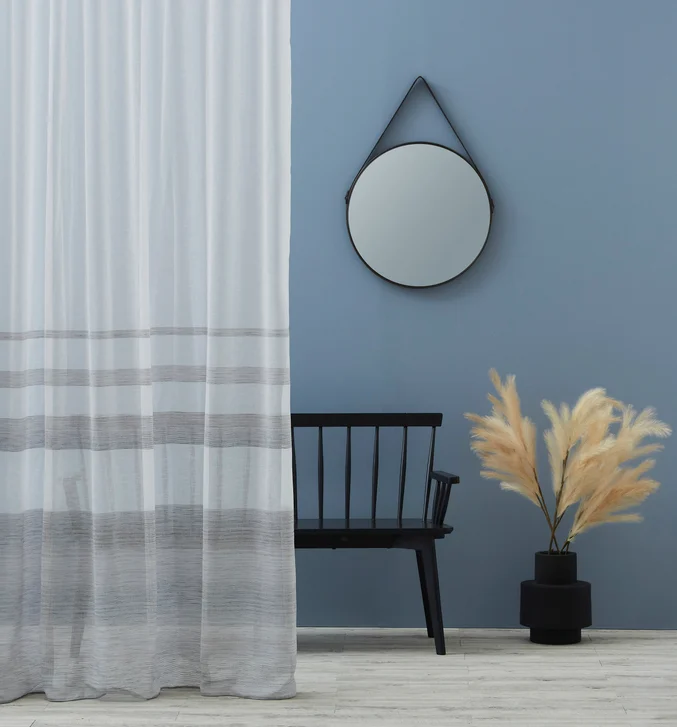

The sheer curtains of today have undergone a significant transformation from the net-like doilies of the past. Instead of florals and lace, modern sheers prioritise texture, whether that be fine, chunky, or smooth, with a lustrous or organic appearance. While the allure of sheers lies in their capacity to diffuse gentle light into contemporary residences, their enduring status in interior design is attributed to their pragmatic and functional versatility.
Blog
The furnishing of our interiors is shaped not only by popular styles, but by the physical infrastructure that surrounds us. During the early 20th century, urban areas were built in the Victorian and Edwardian architectural styles, resulting in homes with numerous small rooms featuring fireplaces and sash or bay windows. In the aftermath of World War II, and the subsequent surge in population, the construction of suburban neighbourhoods became a priority to accommodate large numbers of people. Due to the need for rapid housing development, there was little opportunity for architectural innovation, resulting in lowered stud heights, smaller windows, and compact kitchens.
Conversely, European pioneers such as Mies van der Rohe, Le Corbusier, and Frank Lloyd Wright, served as inspiration for a new cohort of architectural visionaries who spearheaded modern design movements throughout the Americas and Australasia. This progression took place simultaneously with advancements in home insulation and cultural shifts in our way of life, resulting in a greater focus on airy interiors with expansive windows, lofty ceilings, and open-plan living spaces.
In the past, the production of sheer drapes was restricted by the limitations of loom size. Initially, they were woven on two bed linen looms that were only 280cm wide, but as time progressed, the industry standard expanded to 310cm-320cm in width. The latest development in loom technology has resulted in an increased capacity to weave extra-wide 350cm drapes. This advancement has led to a reduction in the need for seam joining, resulting in the creation of "continuous drapery." This innovation adds to the aesthetic appeal of a space and preserves the views beyond, without detracting from the ambiance.
In contemporary architectural and coastal homes, sheer curtains are a popular choice for their ability to gently diffuse light and offer privacy without obstructing the scenic view. By introducing texture, sheer curtains offer a human touch to industrial spaces dominated by concrete, glass, and steel, while also imparting a feminine vibe to the room. Additionally, these curtains serve the dual purpose of safe-guarding interior decor from the damaging effects of harsh UV rays, and maintaining a comfortable indoor temperature during both day and night.





Sheer, semi-sheer, & main drape
Sheer, semi-sheer, & main drape
The terms sheer, semi-sheer, and main drape are used to distinguish the opacity and weight of fabrics. The weight is measured in grams per square meter (GSM), indicating the weight of one square meter of the fabric. Generally, fabrics with a higher GSM are denser and less transparent compared to thinner textiles.
Sheer refers to a fabric that is transparent, either due to its fine construction or loose weave with open fibres, enabling visibility through it.
A semi-sheer fabric is more tightly woven and allows some light transmission, creating a slight luminosity. Instead of seeing through the fabric, you'll notice shapes and shadows cast by the filtered light.
The main drape typically refers to a solid face fabric that's densely woven, and it often showcases intricate patterns or prints.
Should You Line Your Curtains?
Should You Line Your Curtains?
The most crucial aspect of any curtain is its lining, as it plays a pivotal role in achieving optimal results. A lining is indispensable for increasing the longevity of all curtains and soft furnishings in your household, particularly delicate sheers.
Linen is a beloved material in the industry, whether it's authentic or a linen-imitating fabric. Its enchantment lies in its translucent nature, allowing its texture to be visible as you peer through it. However, using a blackout lining behind it can make linen appear lacklustre and cause it to lose its ethereal allure.
To preserve the linen's delicate quality and safeguard it against UV damage, a cost-effective solution is to incorporate a plain polyester voile lining. A useful tip is to have a plain voile lining like FR ONE's Voile, that can be detached and used with the sheer. This way, if the lining needs replacement, the original face fabric can be kept, which not only maintains the value of the face fabric, but also saves money.
Patterned sheer textiles can be transformed into a primary drape rather than just a sheer by adding a lining. This airy appearance is particularly favoured in warm, coastal areas such as New South Wales, Queensland, Western Australia, as well as in the upper North Island of New Zealand.
Blinds and Curtains
Blinds and Curtains
Roller blinds offer an excellent alternative to "double tracks," which feature the lining on the rear track and the sheer on the front track. It's important to avoid leaving the face fabric unlined, which is where the double track comes into play. Once the linen sheer is drawn across and exposed to sunlight, the UV rays start to cause damage. To provide optimal protection, it's advisable to opt for a lined sheer along with a roller blind, or some other type of filter blind. This offers the most comprehensive safeguarding solution, as roller blinds also shield the upholstery fabric of furniture, resulting in a double benefit.
Many customers opt for blinds as a budget-friendly choice, but often return to add sheers later on. This is because blinds can feel stark and impersonal, particularly in key living areas or master bedrooms. Incorporating sheers can bring a sense of softness, texture, and fluidity to a space, capturing and reflecting light as they sway in the breeze.
To safeguard your home against excessive heat and light while preserving the delicate appearance of a flowing linen sheer, consider lining the sheer curtain with a plain voile and then installing venetians, shutters, or roller blinds as the blackout layer. The blind can be positioned within the window frame for a seamless look, while still providing effective light control all day and night.
The curvaceous lines favoured by master craftsmen like Vladirmir Kagan and Pierre Paulin have inspired contemporary designers to create pieces with organic forms. In this article we reveal manufacturing secrets, and discuss which upholsteries will accentuate curves in all the right places.
