
There’s a range of curtain header styles to choose from. They not only provide functional benefits, but they will also greatly impact the look and feel of a space; whether the space takes on a traditional or more modern aesthetic.
Blog

Alassio by Zepel | Wave Header

Brugge by Zepel | Eyelet/Wave Header

Mathilde by Zepel | Single Pinch Pleat

Antares by Zepel | Double Pinch Pleat
A Guide to Specifying Curtain Headers
Curtains have the ability to transform a space, adding impact, privacy and comfort. The saying that a window unfurnished is a window unfinished is true in our view. However, when designing custom made curtains there are many decisions to be made throughout the process. The most important task is specifying the fabric which needs to be based on aesthetic, performance, and budget requirements.
A part of the specification process is to resolve the appropriate heading style. This is how the fabric is sewn or pleated at the top of the curtain, and it will have a direct impact on the way in which the fabric will drape or hang, as well functional characteristics. This includes ‘stack back’, (the amount of space a curtain will occupy when fully drawn open).
There’s a range of heading styles to choose from. They not only provide functional characteristics, but they will also greatly impact the look and feel of a space; whether the space takes on a traditional or more modern aesthetic.
The headers below are the six most popular styles across Australia and New Zealand as outlined by our customers, and we summarise appropriate fabric choices for each.
BOX PLEAT, ALSO KNOWN AS AN INVERTED PLEAT
BOX PLEAT, ALSO KNOWN AS AN INVERTED PLEAT
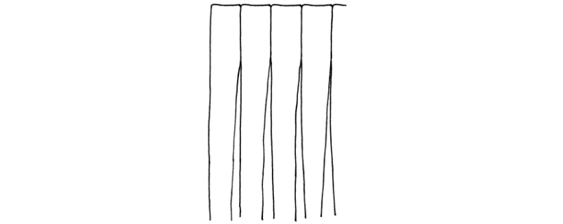
A classic curtain heading style creating a tailored finish. Deep inverted pleats run across the top of the drape to create a flat heading style that is designed to sit neatly under a curtain rod or on a track. Creating cohesive folds, the box pleat is suited to most fabrics however when using highly patterned designs, especially geometrics, be mindful that the pleating can disrupt the pattern match. A great heading style when using a standard width fabric as joins can be hidden into the fold of the pleat, therefore minimising the appearance of seams.
WAVE HEADER, ALSO KNOWN AS AN S-FOLD
WAVE HEADER, ALSO KNOWN AS AN S-FOLD
S Fold or Wave curtain headings provide an elegant look which is suited to most solid, patterned and sheer fabrics. With the use of structured bukram tape adhered to the back of the header, the fabric is evenly distributed in a symmetrical ‘wave’ form. Selecting a wide width fabric is a great way to achieve a continuous formation across a window without joins or seams, leading to production efficiencies and minor stitching.
Synthetic fabrics are best suited to a Wave heading style by maintaining stable formation over large windows as opposed to some natural fibres that may fall in a more relaxed manner.

PINCH PLEAT HEADERS, INCLUDING SINGLE, DOUBLE AND TRIPLE PINCH PLEATS
PINCH PLEAT HEADERS, INCLUDING SINGLE, DOUBLE AND TRIPLE PINCH PLEATS
The Pinch pleat creates a timeless look. The pleats are created through folded creases in the stiff buckram inserted within the header. Hooks are then inserted, and the curtain can be hung on a track. A more popular choice is hanging this header style from a rod. The three varieties of Pinch Pleat headers are distinguished by the number of folds/creases at the top (single, double, or triple), as well as the fullness, stack back, and the overall aesthetic.

SINGLE PINCH PLEAT, ALSO KNOWN AS THE NEW YORK PLEAT
SINGLE PINCH PLEAT, ALSO KNOWN AS THE NEW YORK PLEAT
From the three pinch pleat varieties, the single pinch pleat curtain heading style offers a more contemporary aesthetic. It also provides an economical use of fabric ideal for small spaces that stacks well and is suitable for a range of fabrics including sheers, solids, and patterns. particularly effective for heavier fabrics.

DOUBLE PINCH PLEAT, ALSO KNOWN AS THE DUTCH PLEAT
DOUBLE PINCH PLEAT, ALSO KNOWN AS THE DUTCH PLEAT
A curtain heading style that is versatile and has a more traditional look creating an even, consistent aesthetic with a tidy stackback. whilst maintaining fabric efficiency, the finished look is full, and elegant. The double pinch pleat is simple to install and has great draping qualities. the soft structured appearance of this pleat makes it suitable for not only full-length curtains, but to curtains that finish at dado level - (bottom third of the wall, approximately, windowsill height).
TRIPLE PINCH PLEAT, ALSO KNOWN AS THE FRENCH PLEAT
TRIPLE PINCH PLEAT, ALSO KNOWN AS THE FRENCH PLEAT
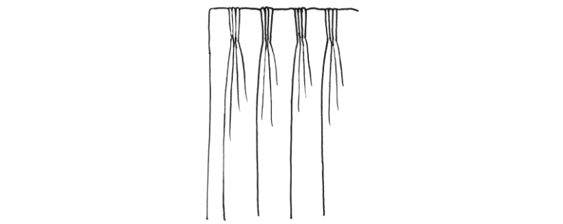
Often considered a very formal, the triple pinch pleat is a traditional heading style that creates a luxurious, full curtain. This decorative curtain heading style is best for an vast room where it can be fully admired. It lends itself well to luxurious, opulent fabrics however it does require more fabric than the single and double pinch pleat curtain heading styles.

PENCIL PLEAT, ALSO KNOWN AS A GATHERED HEADER
PENCIL PLEAT, ALSO KNOWN AS A GATHERED HEADER
Defined by its small sized pleats, the pencil pleat is a gathered header allowing the fabric to gather at your desired fullness. The fullness is determined by the amount of fabric folded with the cords are pulled, and due to volume created here, it’s advised to avoid heavy or bulky fabrics as these can disrupt the even distribution of the fabric folds.
Learn more about curtains and our full range here.
As technology advances in all industries, we are thrilled to be able to deliver a digital tool to our customers that enables them to visualise their favourite fabric within a space – on a sofa, chair, or as curtains in a room. Many people find imagining a new upholstered piece of furniture or set...
