
Designing furnishing fabrics while being mindful of the environment opens many expected as well as surprising discussions during the development process. At Zepel, we not only look at the quality of recycled yarn being used in textiles design, but the operational practices of our Mills to ensure they are working within sustainable regulations and are accredited with intrinsic industry standards. These are the expected considerations in the development of sustainable furnishings, however there are technical aspects of the process, particularly recycled polyester, that are surprising in regard to aesthetics and manufacturing. Below are questions we are often asked in the Design Studio.
Blog

Natural Stories Collection

Colour sorting discarded textiles. Sourced from Pinterest.

Cavalry, FibreGuard
Sustainable Design: Recycled Yarn Technology
Aesthetics
Do recycled fabrics offer the same look and handle as fabrics composed of virgin yarn?
Aesthetics
Do recycled fabrics offer the same look and handle as fabrics composed of virgin yarn?
Yes, the quality of furnishing fabrics containing recycled content has the exact same quality, look, and handle of designs composed of virgin yarn. Essentially, the only part of the manufacturing process that differs is recycled yarn is created from regenerated liquid polymer or pulverized discarded fibre that’s been sorted by colour/composition. The vital stage of the fibre being spun, strengthened, and stretched through a repeated process is aligned across virgin and recycled yarns. Additionally, this means that the durability of the textiles are not compromised, and you can still rely on our high performance brands such as FibreGuard and FibreGuard Pro to deliver the same promise of superior longevity.
Can various surface textures and lustres still be achieved with recycled yarns?
Can various surface textures and lustres still be achieved with recycled yarns?
Yes, all types of finishes, textures and lusters can still be achieved with fabrics that are composed of recycled yarns. It’s not solely the yarn or composition that determines the overall look and handle of a fabric, but the weave structure and final finish such as a heated treatments to achieve a sheen, ‘calendaring’ to create a smooth, compressed surface, or ‘stonewash’ finish to create softness, flexibility, and a worn look.
Do recycled yarns impact fabric colourways?
Do recycled yarns impact fabric colourways?
Yes, there are impacts to colour when recycled yarn is created. For example, when creating recycled polyester, the inherent colour of the PET plastics used can affect the final hue of the yarn produced. During the recycling process manufacturers try to eliminate this intervention as much as possible by isolating white, blue, and clear discarded plastics. These are the most valuable plastics, as they can be turned into white fabric, the most versatile textile for dyeing and achieving a desired vibrancy. A similar process is also applied to recycled fabrics from the fashion industry. These textiles are sorted into similar colour piles before shredding, so final yarn produced from each grouping has a shade consistency. In fact, some Mills have specialised artisans that mix various recycled coloured fibres to create unique shades that are chemical and dye-free.

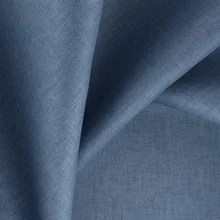


Manufacturing
What is the process of creating recycled polyester?
Manufacturing
What is the process of creating recycled polyester?
Recycled polyester is constructed from PET plastics that are collected from landfill or the sea. These discarded plastics are washed in a revolving cylinder called a Tromel to remove labels, debris and then shredded into tiny chips. The chips are then sorted into similar colours via an infrared ray and spectrum camera. These colour sensors recognise the various plastic shades and sort them into piles. These chips are dried with any residual contaminants extracted, and then move through a heated chamber to be melted into liquid polymer. As the polymer moves to the final stages of the chamber, it is pushed through a shower head like device to create fine strands, (endless filament). This filament goes through a process of being funneled and wound to strengthen the fibre, and then heated and stretched for the final stage. This refined fibre is wound onto a spool and distributed to Mills to be dyed and woven into fabric.
How does recycled polyester and cotton save resources and energy?
How does recycled polyester and cotton save resources and energy?
Compared to virgin yarns, manufacturing recycled yarns can conserve resources such as water, fabric dye materials and petroleum extraction (crude oil). The yarn creation process is essentially given a head start, resulting in energy conservation by minimised manufacturing processes.
Recycled polyester constructed from descarded PET plastics requires approximately 59% less energy to produce and reduces CO2 emissions by approximately 32%.
Cotton is one of the most energy consuming fibres requiring a large amount of water, energy, and labor. Recycled cotton, however, demands fewer resources to manufacture by removing the plant cultivation process, and can save approximately 765 cubic meters of water per tonne when produced.
Sustainable textile design is still evolving, and will continue to do so for many years. We still have a long journey ahead to recycle more than we are consuming globally, but the amount of initiatives and interest across this industry is growing. A discussion to be continued.


It is common knowledge that the fashion and furnishing textiles industries are large global polluters. This includes the resources required for the growing of plants like cotton, to the dying of yarns, and the amount of product sent to landfill. There are many areas in which change is urgently re...
