


In 2009 Christian Fischbacher introduced their first offering of luxury fabrics composed of recycled yarn in the collection, Benu Recycled. This milestone was fostered by Creative Director Camilla Fischbacher, who has been consistently working towards incorporating sustainable practices and innovative yarn technology in the range. Christian Fischbacher were the first to use recycled plastic bottles in yarn construction, and have persistently improved processes to incorporate new designs, structures, and techniques over the years. One of their recent releases, Benu Net, is made from Seaqual ® yarn constructed from marine PET plastics. These innovative designs support the environment and circularity by contributing to cleaning-up the ocean. Other designs incorporate yarns woven from recycled wool off cuts from the Italian fashion industry and Trevira yarn, a fire-retardant construction. We wanted to delve more deeply into the fascinating processes behind Benu Recycled and had the pleasure of speaking with Camilla Fischbacher directly.
Renewed through Benu
Sustainability Q&A with Camilla Fischbacher
How has recycled yarn within furnishings developed over the years?
How has recycled yarn within furnishings developed over the years?
It has been a gradual increase of interest over the past 10 years but has reached a new height in popularity over the last 2 years. With becoming popular, I have more producers willing to take the risk with supporting recycled yarn. It’s a steep learning curve for these producers – meaning it’s not enough to produce the product, they also must change the entire chain of working with recycled fibres because they react differently during manufacturing. However, in the early stages of its introduction in the industry, the two companies that offered recycled fabrics went bankrupt as there wasn’t enough consumer support. With its steady rise in interest, my producers now offer a variety of recycled options, which is why we have products with refined finishes, particularly sheers with lighter, ethereal qualities. Basically, as the demand for recycled yarn has increased so has the possibilities with fabric structures.
What is the general process of creating recycled yarn, particularly Seaqual® yarn, and how did you come to include this fibre in the Benu range?
What is the general process of creating recycled yarn, particularly Seaqual® yarn, and how did you come to include this fibre in the Benu range?
In 2009 I saw a footage of an island of plastic floating in the Atlantic which was the size of Switzerland, and I found it so frightening. I thought ‘are we really living with this floating around us’! Shorty after, a producer told me about how they sourced Seaqual ® yarn made from discarded marine plastics and it rang all the right bells for me - the timing was perfect. This particular producer knows that I keenly support sustainability and therefore consulted with me first. Immediately after our discussion I knew this yarn would be a perfect addition to the Benu range and would champion the sustainable approach I was seeking.
Seaqual ® yarn is made entirely from upcycled marine plastics. The process involves the collection of plastics found in the ocean and on the seabed, including nets or bags. The items are sorted, cleaned, and chopped into tiny pieces. These pieces are melted into small capsules and then into liquid that’s pushed through a shower head device to create fine strands, (endless filament), then spun into yarn.
For yarns constructed from the recycled fashion textiles, the material is sorted by colour, eliminating the energy-consuming process of dyeing. Only the best textile fibres are carded and spun into a new, high-quality yarn. By reducing waste water, dyes and chemicals, the environment is supported and precious energy saved.
Are there any limitations with constructing fabrics from recycled yarn?
Are there any limitations with constructing fabrics from recycled yarn?
Yes, for bright white colourways there was an obstacle with achieving the correct vibrancy as the end result can be largely determined by the inherent colour in the recycled fibre. However after months of trialing various manufacturing processes, we found a solution. Another example is the many challenges we experienced with achieving the correct height of the pile for velvet designs in the Benu range. In terms of texture, we have only recently been able to create recycled fabrics that feel more luxurious as they have been stiff or slippery in the past. Ultimately it’s more of a challenge to influence the finish and texture of recycled constructions - they can have a mind of their own! However, as technology in this area is developing, we are refining manufacturing processes and techniques to achieve improved outcomes.


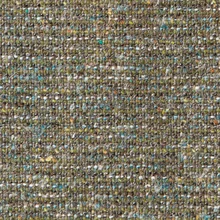

Do you collaborate closely with the mill to resolve finishing issues?
Do you collaborate closely with the mill to resolve finishing issues?
Yes, we work directly with the producer to resolve finishing processes. For example, with our upcoming release, Benu Chalk, we encountered an issue where some of the colours came out wrinkled and others came out flat - there’s all these strange occurrences during final production that we cannot predict because we are producing something that hasn’t been done before. We have encountered this every single time with Benu products, there’s always something that might kill the product, and then in the end, we still manage to find a way – it’s never a straight shoot. But that’s a part of being innovative and at the forefront of sustainable fabrics.
Do you marry yarn quality with a design/and or pattern?
Do you marry yarn quality with a design/and or pattern?
Yes, this is a consideration. For example, Benu Check is an industrially recycled wool that was initially presented to me in a stripe design. It didn’t work, as the design wasn’t enhancing the noticeable wool qualities in the fibre. The design team and I immediately thought 'this must be designed as a check pattern', as we wanted the historic tradition of check fabrics to match the wool composition.
Do you feel pressure to be continuously innovative with sustainable yarn?
Do you feel pressure to be continuously innovative with sustainable yarn?
Yes, but it’s somehow exciting and a new challenge. I rarely have an insight into what our next Benu release will be, and when a new recycled process/concept is developed by my producers, it’s always a great surprise.
Is the future goal to predominately offer recycled designs at Christian Fischbacher?
Is the future goal to predominately offer recycled designs at Christian Fischbacher?
No, it’s just adding onto our range with what the market and our design team are excited about. Our aim is to add a gentle nudge with recycled fabrics, about 2-3 designs per year to the Benu range. Currently there’s a lot of Benu designs, but this took time to accumulate. I’m always more interested in a recycled than a non-recycled fabric, and if it adds value to our collection in a special way, there’s a strong chance it will be introduced.
However, we understand that not everything can be recycled with quality results. I wouldn’t stop making pure silk, I love silk and it will always remain in the collection, and unfortunately it’s recycled counterpart compromises on durability. Regardless if a fabric is composed of recycled or virgin yarn, I truly believe in conscious consumerism to minimise waste. Buy something good and stick with it, it’s quite simple.
